Forming & welding sections
Process configuration is organised around strip feeding, forming rolls and high-frequency welding. Tube section, dimensions and material determine the selection.
PRC / PRODUCTION LINES & EQUIPMENT
High-frequency welding converts hot-rolled, cold-rolled or galvanized strip into round, square and rectangular tubes for construction, transport, machinery and automotive applications.
Discuss your project ↗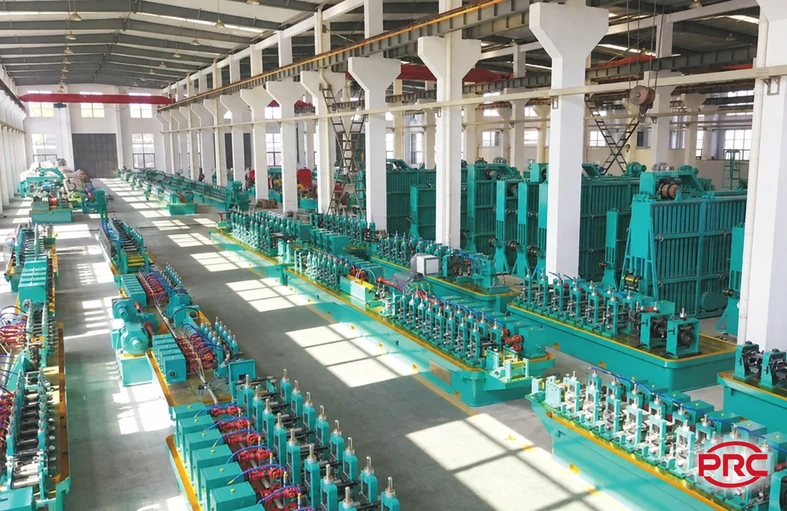 View equipment photograph ↗
Feedstock includes hot-rolled, cold-rolled and galvanized coil, with material requirements such as Q195, Q235 and 16Mn. Finished sections include round, square and rectangular tubes.
| Parameter | Series selection reference |
|---|---|
| Round tube diameter | Ø7–Ø273 mm |
| Wall thickness | 0.18–10 mm |
| Published maximum process speed | 120 m/min |
These figures describe the equipment series. Size, material, speed and capacity limits do not imply that all extremes apply simultaneously to one model. Final selection depends on the product mix and technical proposal.
Process configuration is organised around strip feeding, forming rolls and high-frequency welding. Tube section, dimensions and material determine the selection.
Discuss sizing, cut-off and discharge against the tube section, finished length and handling requirements. Equipment details and interfaces are defined in the project technical agreement.
Specify the round / square / rectangular product mix, cut lengths, weld and finished-product inspection standards, and any downstream tube galvanizing. Dimensions and speeds must be checked for the selected model and material combination.
Provide the shop layout, coil and tube logistics, supply voltage / frequency, cooling-water conditions and interface requirements. High-frequency welding and total line power are calculated for the selected mill.
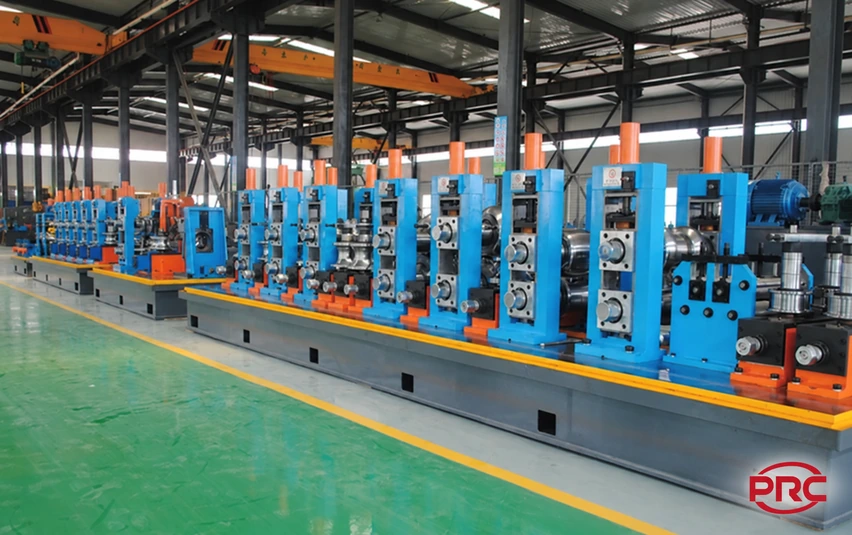
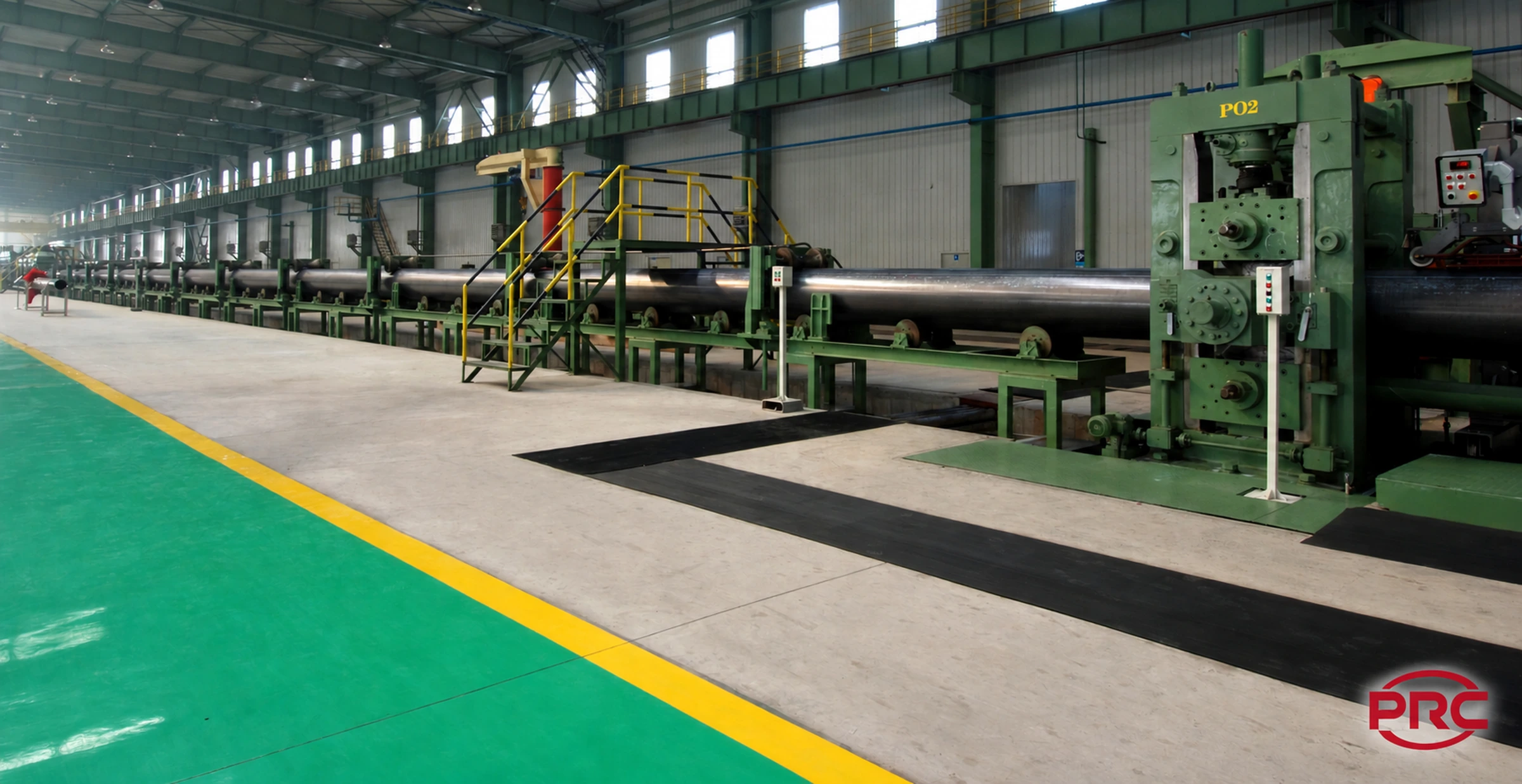
Share the material, key dimensions, output and site conditions to discuss the process and equipment configuration.
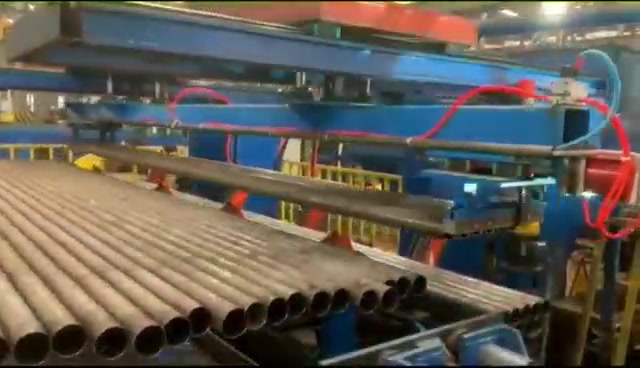
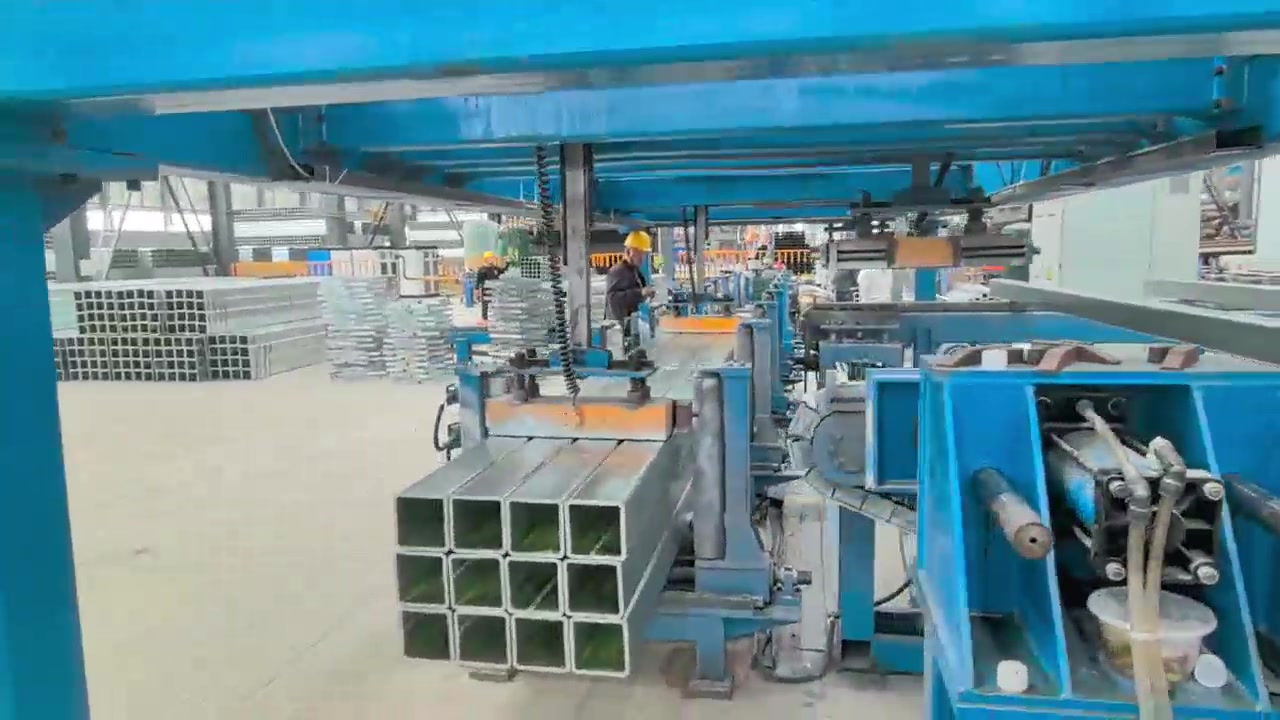
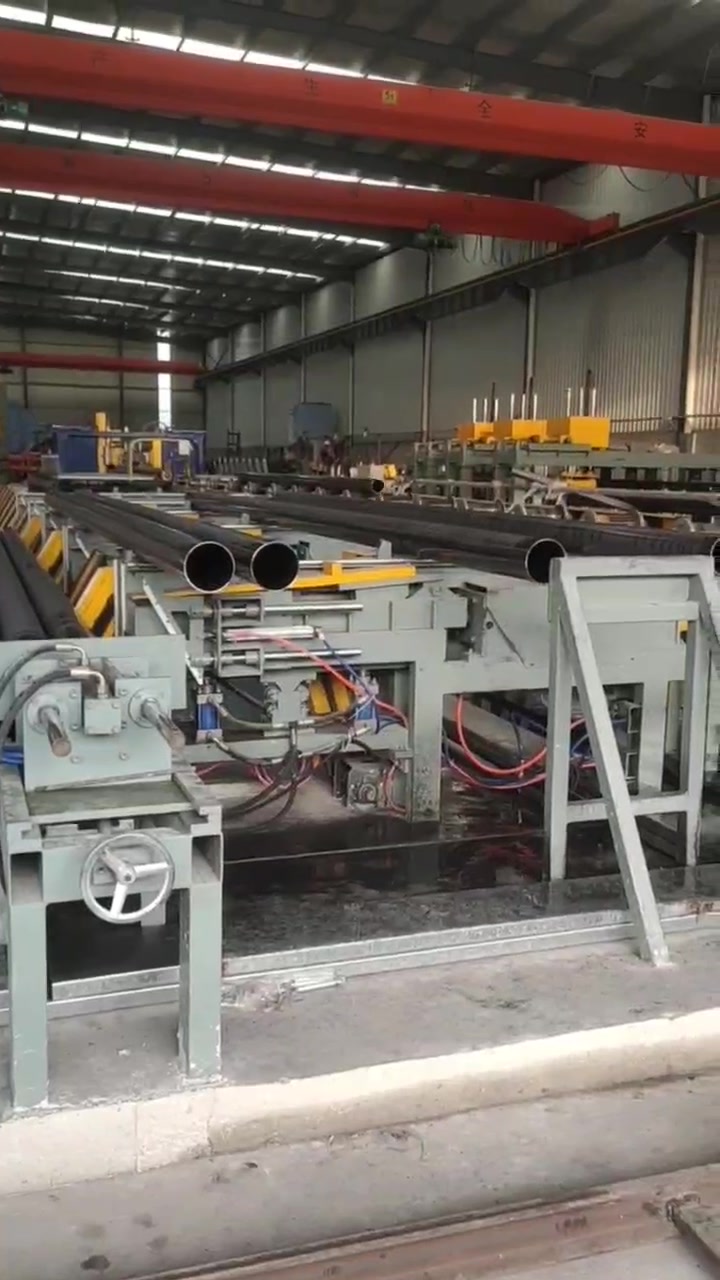
Share project requirements ↗Tube outfeed, transfer and automatic stacking equipment.
Practical answers about selecting equipment and preparing a project. Open a question to read the details.
Start with the material grade and applicable standards, incoming and finished thickness and width, coil weight and diameters, or tube and section sizes. Add the product mix, annual tonnage, dimensional tolerances, surface requirements and the intended application. A sample product table is more useful than a single maximum size.
Also state the project location, available workshop space, existing equipment, utilities and target start-up date. Mark undecided items as TBD; PRC can discuss selection assumptions before the technical scope is fixed. A budget range is optional. Final technical and commercial terms are confirmed in the project documents.
Not necessarily. A product-family range is not a guarantee that maximum width, thickness, strength, speed and annual output can all be reached at the same time. The feasible operating window depends on the material, product mix, equipment configuration and process conditions.
Annual capacity must account for the pass schedule or line speed, operating hours, coil changes, maintenance and product yield. Thickness tolerance, flatness, coating quality and energy figures require defined measurement and acceptance conditions. Confirm the configuration and test product matrix with PRC rather than combining limits from different models or routes.
The scope may include process and equipment selection, main and auxiliary equipment, electrical systems, automation, interface documents, installation supervision, commissioning and operator training. A complete-line contract does not automatically mean responsibility for the entire factory or every building service.
The technical agreement should identify who supplies foundations, buildings, cranes, external utilities, installation labour, test materials and local approvals. It should also define drawings, deliverables, performance tests, spare parts and service responsibilities. PRC also discusses individual equipment supply and revamps where a complete line is not required.
Prepare the workshop dimensions, floor levels, crane capacity, access and logistics, existing foundations and maintenance clearances. Provide the available electrical supply, cooling water, compressed air, ventilation and any process-specific media relevant to the chosen equipment.
Foundation loads, connection points, supply quality and flow requirements must come from the selected design; generic consumption figures should not be used as construction data. Coordinate material storage, coil handling, emergency access and the boundary between supplier and customer works. Local safety, environmental and construction requirements also need to be considered for the project location.