CRM / TCM
Steel Strip Cold Rolling Mill (CRM)
Reversing and tandem configurations selected for your product mix and production target.
Single- and two-stand reversing mills serve flexible production programs. Four- to six-stand tandem mills provide a continuous rolling route for larger production volumes.
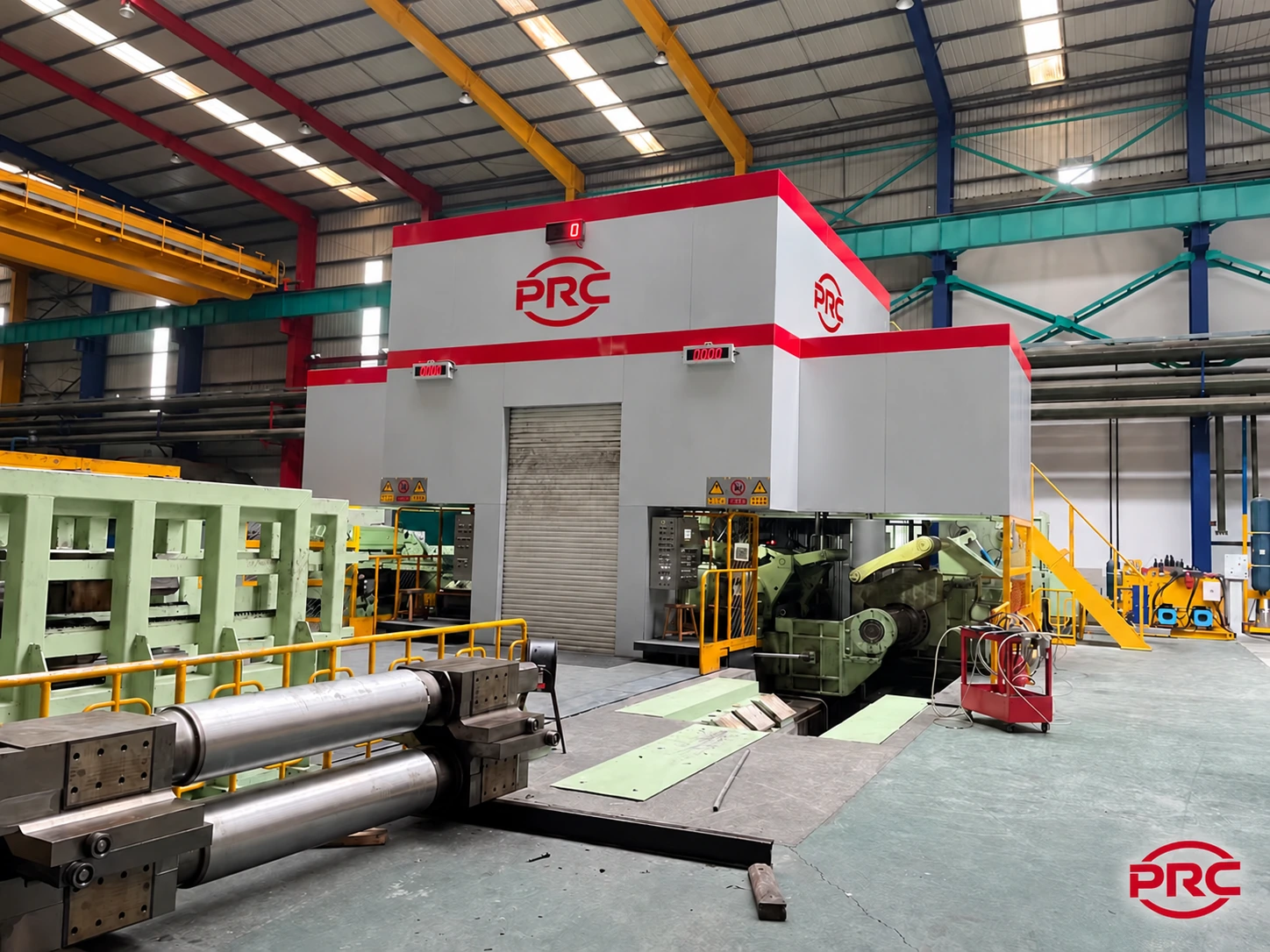
Reversing or tandem rolling
A reversing mill rolls the strip back and forth between entry- and exit-side coilers through multiple passes. A single stand offers flexibility for frequent specification changes, smaller batches and special materials. A two-stand reversing arrangement reduces the number of passes and can increase output while retaining production flexibility.
A tandem cold mill combines four to six stands in series, reducing the strip in one passage through the mill train. Selection depends on annual output, thickness range, product mix and changeover requirements.
Specification and configuration range
| Item | Reversing mill | Tandem cold mill |
|---|---|---|
| Annual output | 100,000–400,000 t/year for a single stand | Up to 1,200,000 t/year |
| Strip width | Up to 1,800 mm | Up to 1,800 mm |
| Stand arrangement | One or two stands; 4-high or 6-high | Four to six stands |
| Coiling | Entry- and exit-side coilers | Dual-channel, dual-coiler configuration where specified |
| Controls | AGC / AFC, roll bending and shifting | AGC / AFC and interstand tension control |
The ranges shown are not simultaneous guarantees for every configuration. Output is calculated from the product mix, pass schedule and annual operating hours. The final scope and performance criteria are agreed for each project.
Reduction and product quality
Selected reversing mill configurations can achieve a total reduction of 96% or more without intermediate annealing. Applicability depends on the steel grade, incoming condition, reduction schedule, mill stiffness, roll bending, gauge and flatness control, and lubrication and cooling. This is a total reduction over the rolling campaign, not a single-pass reduction or a guarantee for all materials.
Process route
- Coil loading and entry preparation: coil car, uncoiler, straightening and entry tension equipment.
- Rolling: multiple reversing passes, or passage through the tandem stand train.
- Gauge and flatness control: AGC, roll bending, intermediate-roll shifting and zoned coolant control as specified.
- Recoiling and unloading: coilers, coil handling and the selected exit arrangement.
Main equipment and systems
- Mill stands, roll assemblies, bearings, adjustment systems and main drives.
- Work-roll and intermediate-roll bending; intermediate-roll shifting where specified.
- Automatic gauge control (AGC), automatic flatness control (AFC), tension and drive coordination.
- Rolling-fluid circulation, filtration, cooling and oil-mist extraction.
- Thickness and flatness measurement; roughness and surface inspection according to scope.
- Coilers, roll-changing and coil-handling systems.
- For continuous tandem configurations: entry welder, accumulator, shear and associated automation as specified.
Selection inputs and interfaces
Provide incoming and finished thickness, strip width, steel grades, coil weight and diameters, annual tonnage and batch distribution. State the required thickness tolerance, flatness, surface quality, maximum total reduction and whether intermediate annealing is permitted.
Workshop dimensions, crane capacity, roll-changing space, electrical supply, cooling water, lubrication and filtration, oil-mist handling and material logistics must be coordinated. For revamps, provide existing drawings, operating data and the available shutdown window.
Steel Strip Cold Rolling Mill (CRM) Technical Questionnaire
Fill in your production requirements, material data, mill preferences and project scope. The supplied form can be completed on screen and printed or saved as PDF, then returned to your PRC contact.
Open the English questionnaire →Contact PRC about your mill →Related equipment
Discuss pickling equipment → · Steel Strip Temper Mill (TM) → · Strip processing equipment →
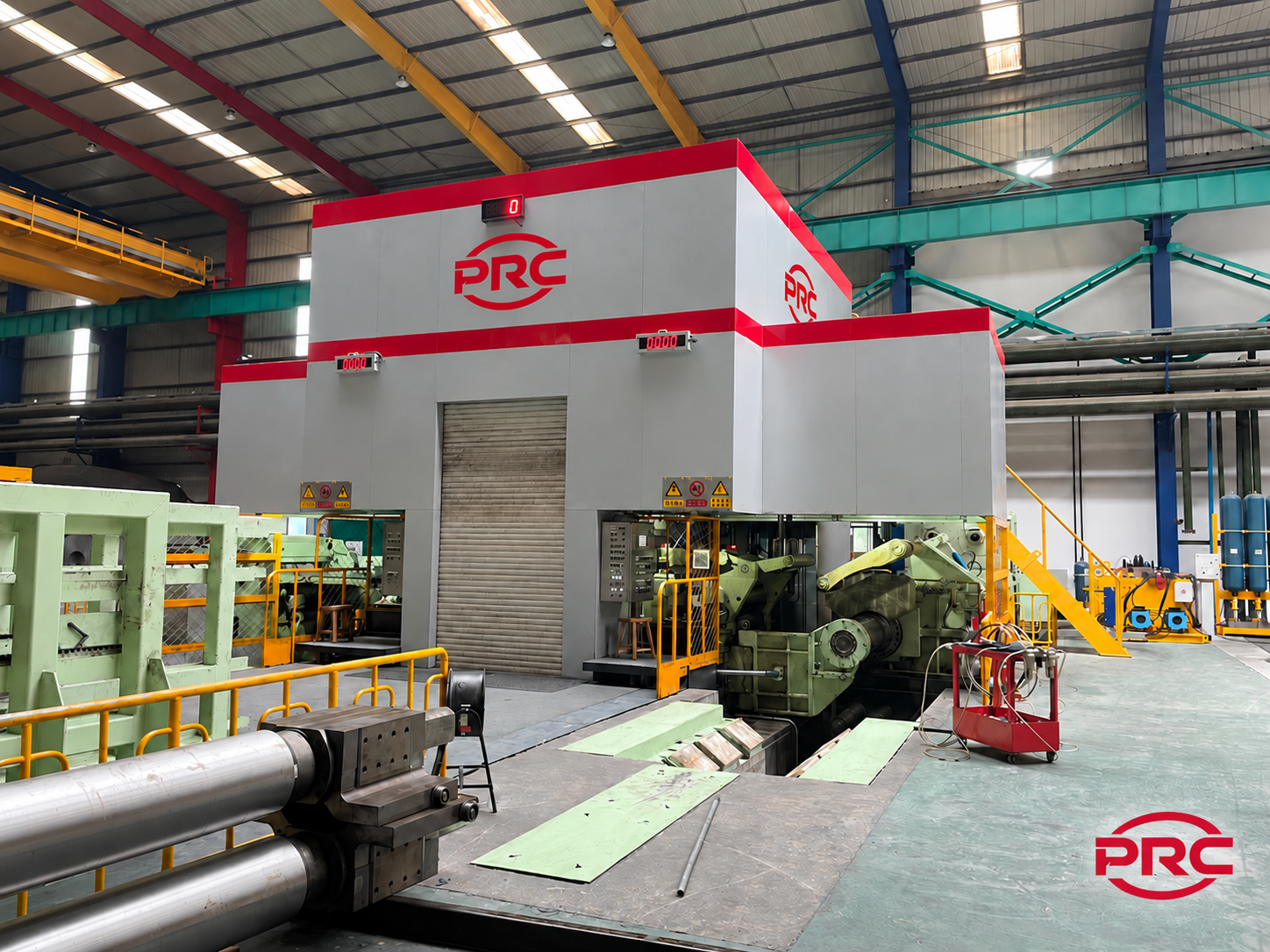
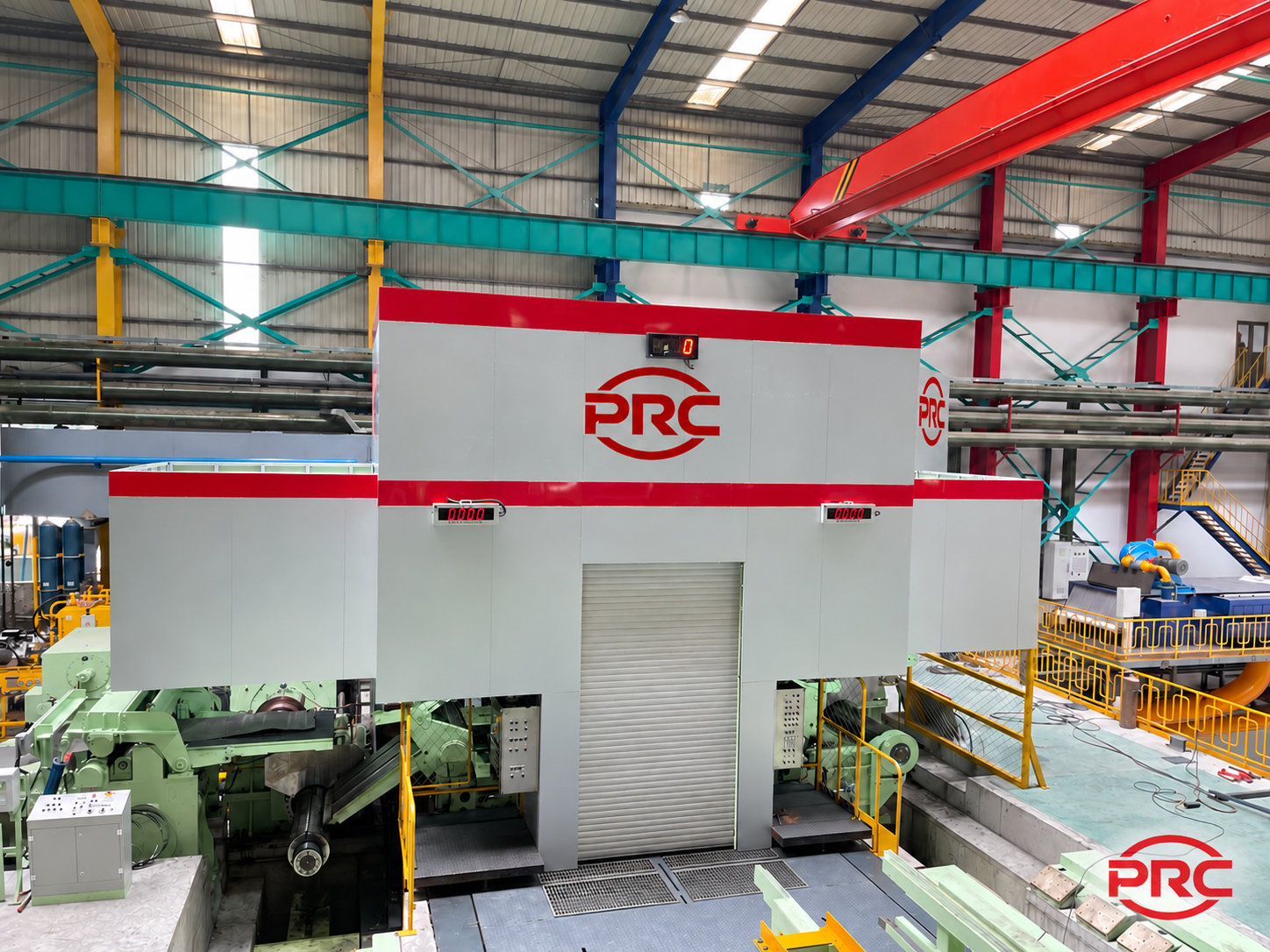
Mill photographs
Frequently asked questions
Practical answers about selecting equipment and preparing a project. Open a question to read the details.
What information is needed for a useful quotation?
Start with the material grade and applicable standards, incoming and finished thickness and width, coil weight and diameters, or tube and section sizes. Add the product mix, annual tonnage, dimensional tolerances, surface requirements and the intended application. A sample product table is more useful than a single maximum size.
Also state the project location, available workshop space, existing equipment, utilities and target start-up date. Mark undecided items as TBD; PRC can discuss selection assumptions before the technical scope is fixed. A budget range is optional. Final technical and commercial terms are confirmed in the project documents.
Can all published maximum specifications be achieved together?
Not necessarily. A product-family range is not a guarantee that maximum width, thickness, strength, speed and annual output can all be reached at the same time. The feasible operating window depends on the material, product mix, equipment configuration and process conditions.
Annual capacity must account for the pass schedule or line speed, operating hours, coil changes, maintenance and product yield. Thickness tolerance, flatness, coating quality and energy figures require defined measurement and acceptance conditions. Confirm the configuration and test product matrix with PRC rather than combining limits from different models or routes.
What is included in a complete-line project?
The scope may include process and equipment selection, main and auxiliary equipment, electrical systems, automation, interface documents, installation supervision, commissioning and operator training. A complete-line contract does not automatically mean responsibility for the entire factory or every building service.
The technical agreement should identify who supplies foundations, buildings, cranes, external utilities, installation labour, test materials and local approvals. It should also define drawings, deliverables, performance tests, spare parts and service responsibilities. PRC also discusses individual equipment supply and revamps where a complete line is not required.
What site conditions and utilities should the customer prepare?
Prepare the workshop dimensions, floor levels, crane capacity, access and logistics, existing foundations and maintenance clearances. Provide the available electrical supply, cooling water, compressed air, ventilation and any process-specific media relevant to the chosen equipment.
Foundation loads, connection points, supply quality and flow requirements must come from the selected design; generic consumption figures should not be used as construction data. Coordinate material storage, coil handling, emergency access and the boundary between supplier and customer works. Local safety, environmental and construction requirements also need to be considered for the project location.